
When Soil and Water Remember
A Ukraine–South Africa dialogue on land, memory, war, and the ecological futures we must now imagine

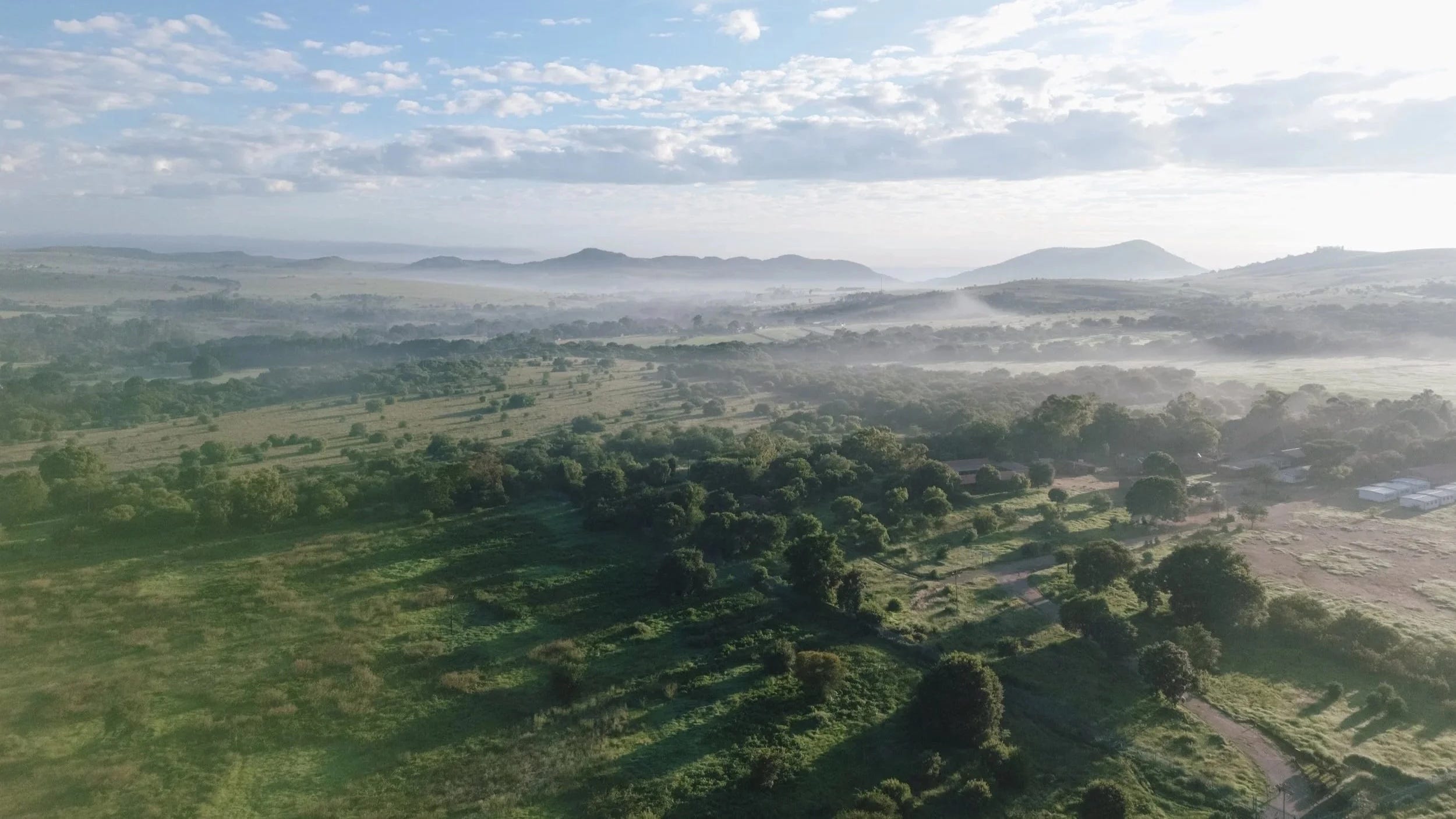
There are landscapes that quiet you before you speak.
At the Kromdraai Impact Hub, on the edge of the NIROX Sculpture Park, the land does not perform its age. It does not insist on its importance. It simply holds you inside deep time. The hills are patient. The dolomite carries the memory of water. The red earth stains your shoes without apology.
It was here that Shared Ground: Episode 1, When Soil and Water Remember, part of NIROX Conversations, unfolded. Moderated by me, Ithateng Mokgoro, the dialogue brought Ukrainian artists Anastasia (Nastia) Shcherban and Olha Fedorova into conversation with South Africa’s Diane Victor. What emerged was less a panel discussion and more a slow act of listening across continents.
You can watch the full episode here:
I began writing this reflection on 24 February, the anniversary of Russia’s full-scale invasion of Ukraine. On that day, the artists’ words about poisoned soil and altered meaning returned with force. Landscapes are not neutral backdrops to war. They are its witnesses. They absorb it.
And so the question that shaped the conversation continues to press against the present:
What does it mean when land remembers?
Black Earth, Red Earth
Olha spoke about Ukraine’s black earth with a tenderness that made it feel almost animate. The soil of her region is famous for its fertility. It carries gardens, fields, childhoods. Since the invasion, that same soil carries craters, contamination and a psychic charge that did not exist before. She described landscapes as “infected”. Not only physically polluted, but symbolically altered. You can no longer walk into a field without imagining what lies beneath it.
War, she suggested, changes the meaning of land.
In South Africa, we know something about altered meaning. Land here is layered with dispossession, extraction and legal fiction. The 1913 Natives Land Act did not only redistribute hectares. It redistributed belonging. It severed relation and replaced it with title.
In Setswana, re bana ba lefatshe. We are children of the earth.
In Sesotho, mobu ha o bue leshano. The soil does not lie.
In Sepedi, lefatshe ga se la motho a le mongwe. The land does not belong to one person alone.
These are not poetic ornaments. They are ontologies. They insist that land precedes ownership.
Listening to Olha speak about black earth in Ukraine while standing on red earth in Gauteng, I felt the strange intimacy of two soils that have both been made to carry history.
Negotiating With the Land
Diane described arriving at the residency with ideas, only to find the landscape gently refusing them. Wind intervenes. Cattle walk through your drawing. Lime behaves differently than you expect. The land edits the artist.
There was humility in that admission.
The Cradle of Humankind, with its limestone caves and fossil record, places human ambition in perspective. The hills have witnessed epochs. We measure time in decades. The land measures it in sediment.
In Sesotho, tsohle di a feta. Everything passes.
And yet, as transient as we are, we have the capacity to scar deeply. Acid mine drainage in Gauteng. Drought cycles in the Karoo. Polluted rivers in industrial corridors. Landscapes here too have been altered, exhausted for profit, dynamited for mineral wealth.
Two countries. Different intensities of violence. Shared experience of contested ground.
Water as Memory
Nastia spoke about water in a way that felt practical and existential at once. In her region, rainfall is a recurring topic of conversation. Drought shapes daily life. Access to clean water is political. It is infrastructural. It is intimate.
In South Africa, the same is true. From water shortages in Nelson Mandela Bay to collapsing municipal systems in small towns, water is not abstract policy. It is survival.
When Nastia described researching local water conditions before arriving in South Africa, I was struck by the instinct to find common ground through ecology. Not through ideology. Through rainfall.
Water becomes a bridge.
Water also becomes a ledger.
It remembers negligence. It remembers mismanagement. It remembers war.
Language as Ecology
The conversation turned, unexpectedly, to language.
Olha reflected on how language shapes perception. If you do not have a word for something, does it fully exist for you? If you inherit a language through conquest, does it alter how you see the world?
South Africa lives inside this question. Eleven official languages and sign language form a chorus of perception. English circulates as convenience and residue. Afrikaans carries layered histories. Indigenous languages encode environmental nuance that English often flattens.
In Tshivenda, muthu ndi muthu nga vhathu. A person is a person through others.
In Afrikaans, maak ’n plan. Find a way.
These phrases are not decorative. They are operating systems shaped by land, scarcity, relation and adaptation.
What if environmental futures were designed with this linguistic plurality at their core? What if climate dashboards spoke in Setswana and Xitsonga as fluently as in English? What if indigenous metaphors informed interface design?
Language is also soil. It carries memory. It can be invaded. It can regenerate.
Artists as Translators of the Future
One of the quiet recognitions in the room was that artists operate in a space between fact and feeling.
Olha spoke about how visual language can move people in ways that reports cannot. Diane acknowledged the tension between permanence and transience. Nastia described balancing commercial design with conceptual art, translating complex ecological questions into forms that can be encountered rather than merely understood.
In a warming world, this translation is not ornamental. It is infrastructural.
The African Union Agenda 2063 speaks of a prosperous and peaceful continent. The Sustainable Development Goals provide metrics. But metrics do not stir imagination. Data does not automatically produce care.
Artists can render soil health visible. They can transform water scarcity into shared urgency rather than isolated complaints. They can invite communities into co-creation rather than passive reception.
Imagine cities where environmental data is publicly accessible and aesthetically rendered.
Imagine regenerative agriculture projects paired with immersive exhibitions that allow urban citizens to experience drought cycles and restoration processes.
Imagine digital platforms governed locally, where communities decide how environmental information is used and shared.
This is not utopia. It is a plausible convergence of technology, indigenous knowledge and artistic practice.
On the Anniversary
Writing this on the anniversary of 24 February, the invasion is not an abstraction. It is a date that reactivates memory.
Olha’s description of soil being symbolically poisoned lingers. The red hills of the Cradle feel calm, but they too have known contestation. Land everywhere carries the imprint of human ambition.
The question is whether it must always carry our violence.
In Setswana, botshelo ke modikologo. Life is a cycle.
If life is cyclical, then extraction can be followed by regeneration. Scar can be followed by restoration. But only if design shifts. Only if governance shifts. Only if imagination shifts.
Listening as Praxis
Shared Ground did not offer policy prescriptions. It offered attention.
It offered a room in which artists from different geographies could recognise each other’s wounds and possibilities. It offered a reminder that soil and water are not passive resources. They are archives. They are collaborators. They are witnesses.
The land remembers.
Our task, perhaps, is simpler and harder than grand strategy.
To listen long enough to change.
Ithateng Mokgoro moderated Shared Ground: Episode 1 as part of the NIROX Conversations series at the Kromdraai Impact Hub, adjacent to the NIROX Sculpture Park, in the Cradle of Humankind. The dialogue marked the beginning of an ongoing exchange, with Episodes 2 and 3 to follow.